• How to Treat an Eating Disorder: An Introduction to Treatment Modalities

    Online Event
    Virtual Event

    Once you recognize that a patient may have an eating disorder, do you know what should happen next? Eating-disorder treatment is never one-size-fits-all. Healthcare and community professionals must understand available treatment approaches, recognize when a higher level of care is needed, and help patients and families navigate appropriate next steps.

    Led by Marissa Sappho, LCSW, BCD, CEDS-S, founder of Aurora Behavioral Health, this four-session seminar provides a practical framework for understanding the treatment landscape, collaborating across disciplines, and facilitating appropriate referrals.

  • ICP Graduation Ceremony

    ICP 33 W 60th St., 4FL, New York, United States

    Please RSVP below for the ICP Graduation Ceremony on Sunday, October 18th, 2026, at ICP. RSVP HERE We are excited to celebrate this special milestone with you and look forward […]

  • Not All Eating Disorders Look Alike: Working with ARFID

    Zoom

    This workshop provides an overview of Avoidant/Restrictive Food Intake Disorder (ARFID), including assessment strategies and evidence-based interventions, with a focus on exposure exercises and relapse prevention techniques.

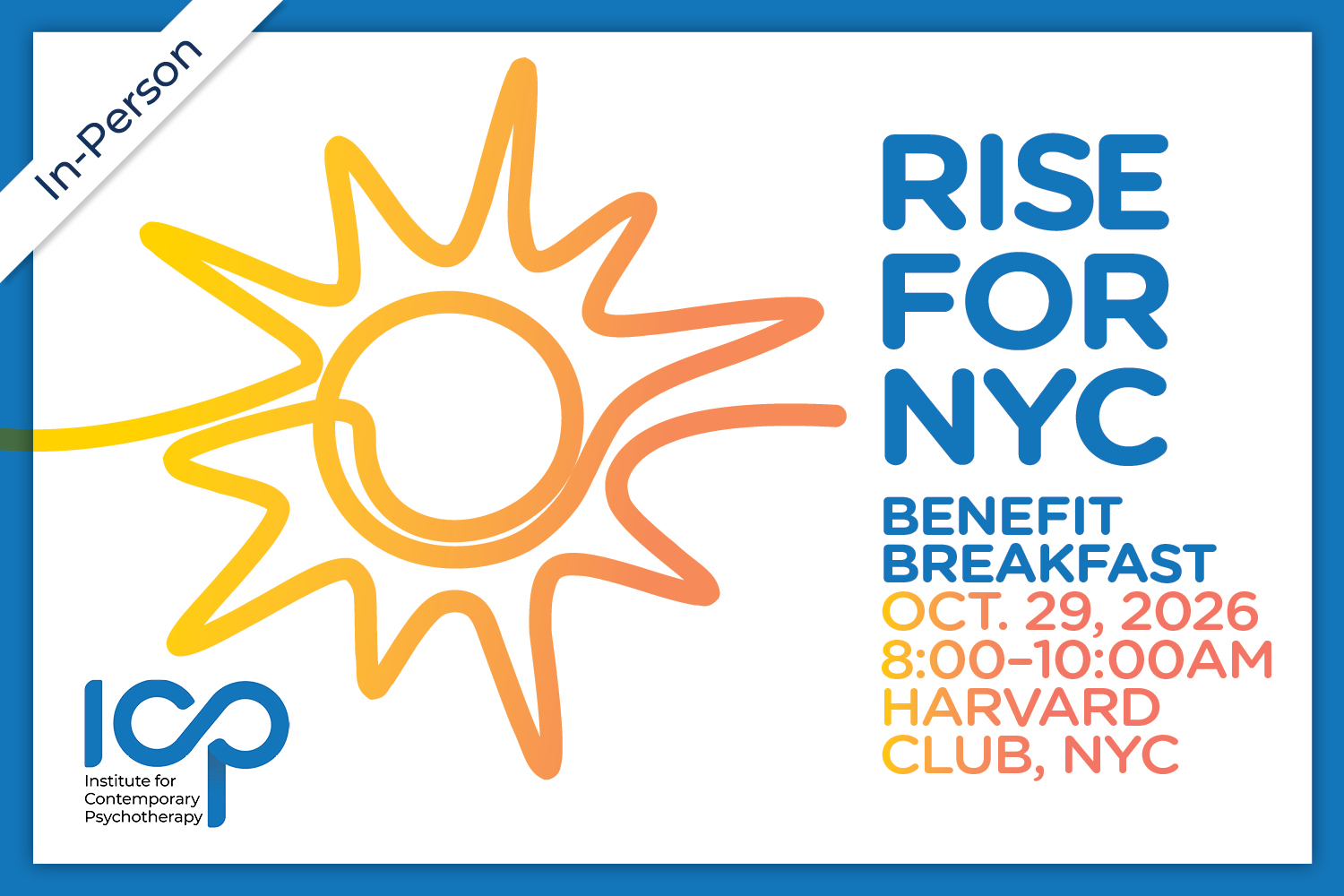
  • RISE FOR NYC Benefit Breakfast

    Harvard Club 35 W 44th St, New York, NY, United States

    Please join us for a benefit breakfast in support of the Institute for Contemporary Psychotherapy.

  • Eating Disorders & Queer Bodies Part 1 & 2

    Zoom

    Presenter: Cate Hickey, LMHC Format: Live Zoom Workshop Date: 11/13/2026 and 11/20/2026 Time: 12:30 PM to 2:00 PM (ET) Continuing Education: 3 NYS CE Credits   Registration   Join Cate Hickey, […]

  • SICP Friday Lecture: Wrestling with the Body: When Somatic Preoccupation Serves as an Escape

    ICP 33 W 60th St., 4FL, New York, United States

    This presentation explores how clinicians can work psychoanalytically with patients whose bodily preoccupations serve a dissociative function. Through four clinical vignettes, it examines somatic countertransference, reverie, and theoretical reframing as tools to foster symbolization, mentalization, and psychological integration.